
Introduction: Why Wire Rod Procurement Requires More Than Price Comparison
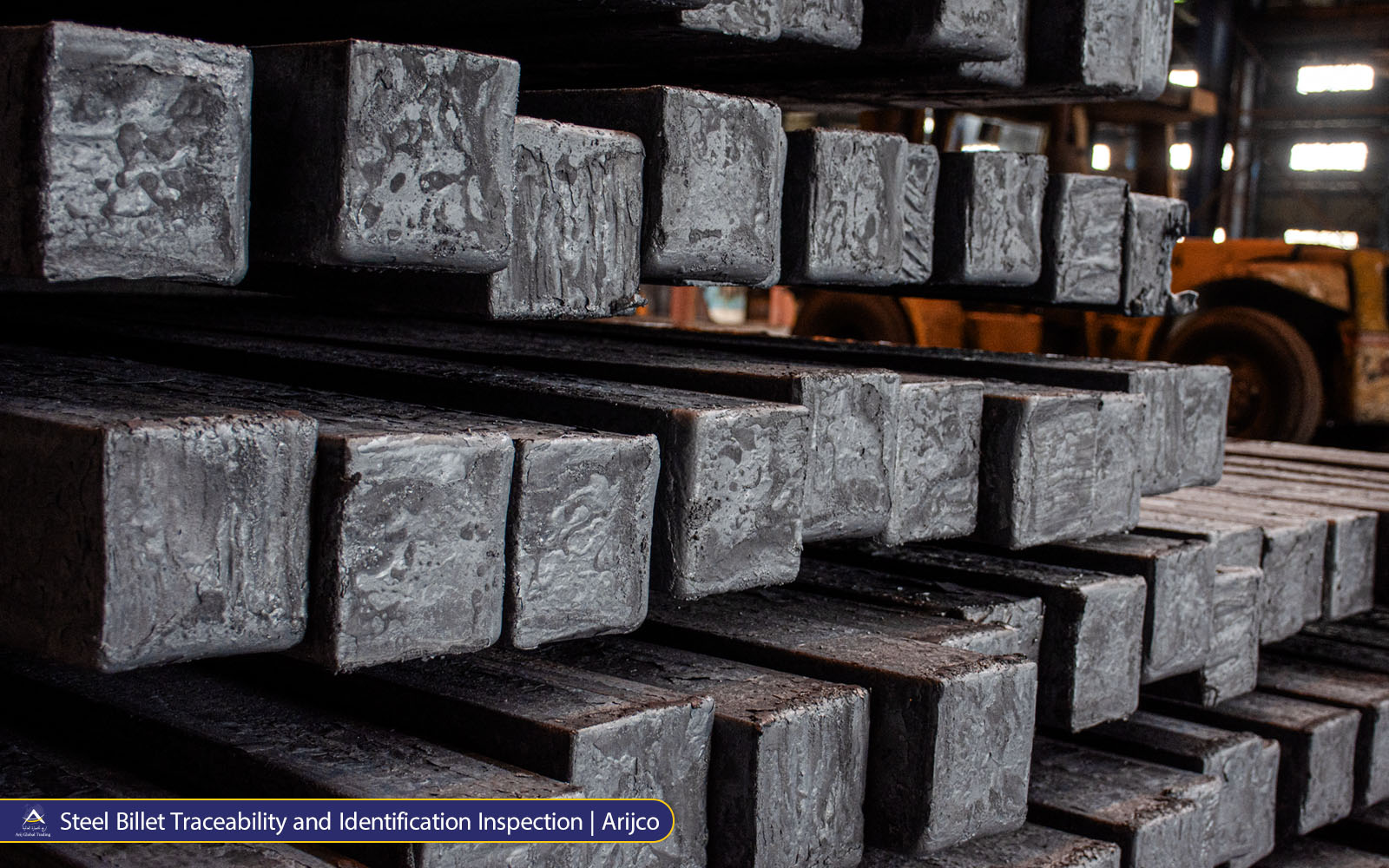
A steel billet shipment can arrive on schedule and match the ordered quantity yet still be unsuitable for production. Steel billet defects, specification mismatches and missing traceability can all prevent a rolling mill from accepting the material.
For a steel billet buyer, the essential question is: Do the billets meet the agreed specification, and is there enough evidence to verify compliance?
At Arij Global Trading (Arijco), we help steel billet buyers align material specifications, inspection requirements, documentation and shipment planning before placing an order.
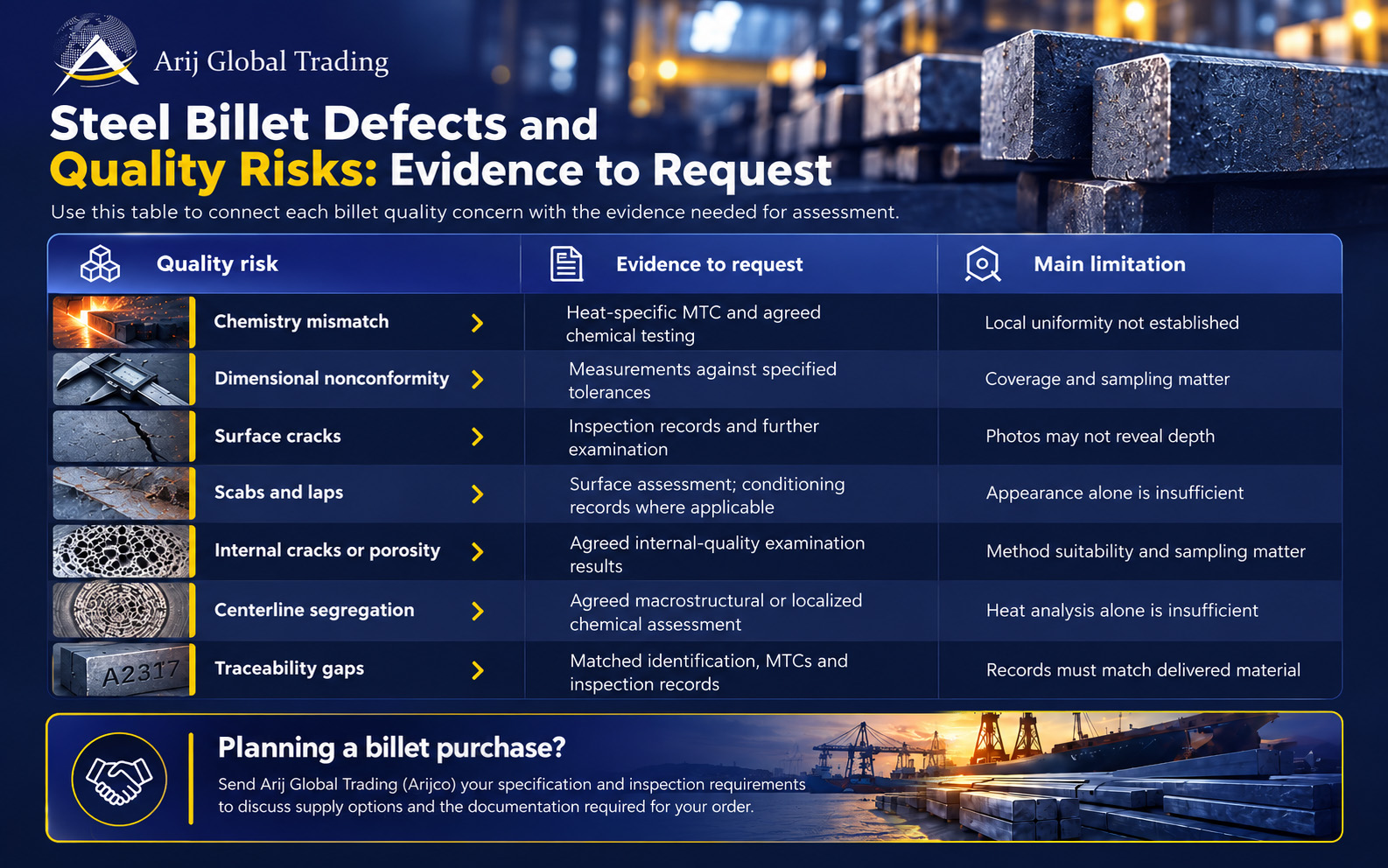
Quick answer: The seven risks covered here are chemistry mismatch, dimensional nonconformity, surface cracks, scabs and laps, internal cracks and porosity, centerline segregation, and traceability gaps. Assess each against the agreed specification using evidence linked to the actual material.
Contents
1. Chemical Composition Outside the Agreed Specification
Chemical compliance starts before the order is placed. Define the billet grade, governing standard and edition, and chemical requirements for the intended finished product.
Request a heat-specific Mill Test Certificate (MTC). Then, check that all required elements are reported, compare the results against the agreed limits, and confirm that the certificate corresponds to the material offered.
Keep billet requirements separate from finished-product standards. ASTM A615/A615M, for example, covers reinforcing bars for concrete reinforcement; it is not a billet grade.
Buyer action: Resolve chemistry discrepancies before release. Rolling is not a corrective treatment for a heat whose chemical composition falls outside the agreed specification.
2. Dimensional Nonconformity
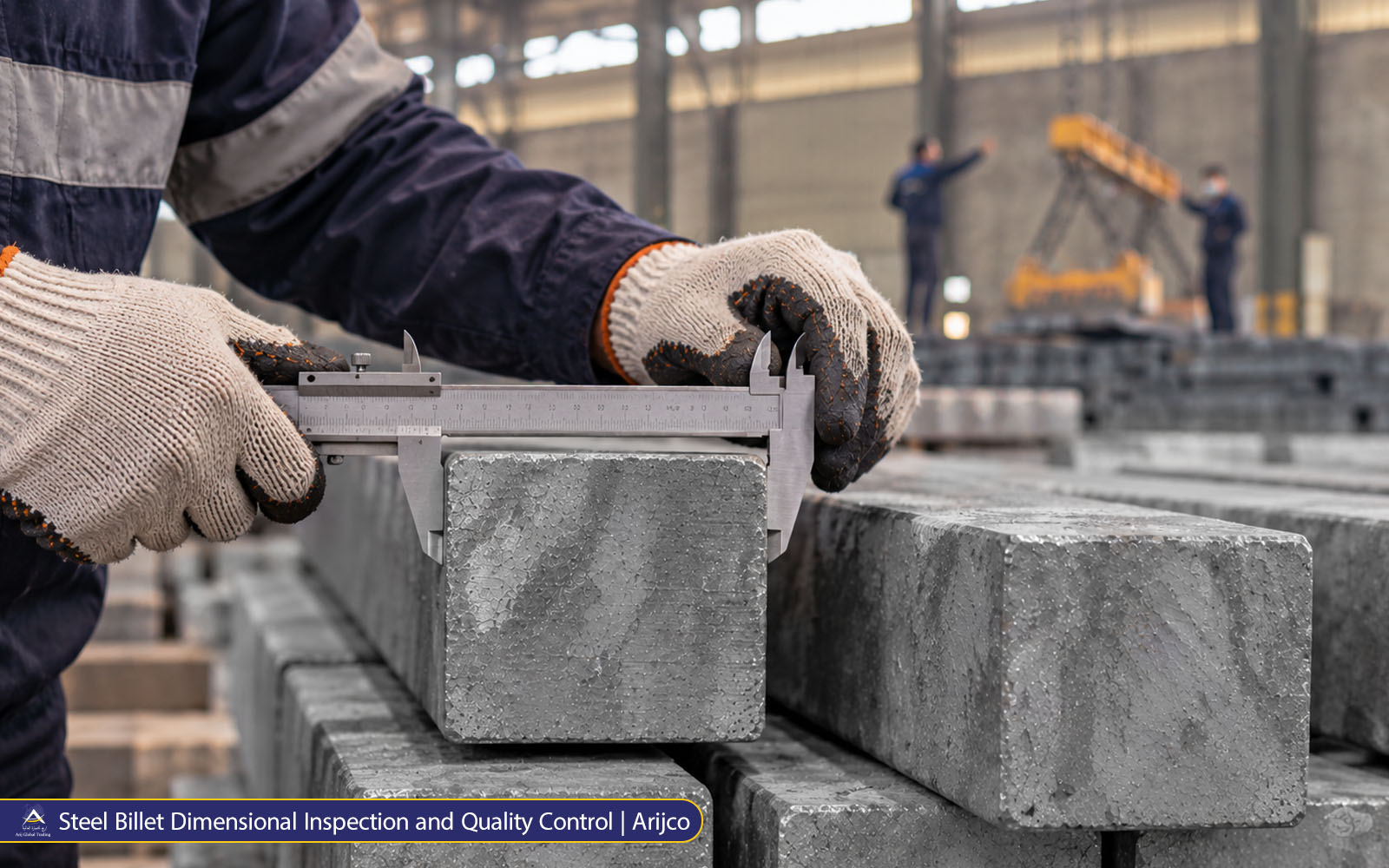
Nominal dimensions alone do not establish compliance. Cross-section, length, straightness and squareness should meet the receiving mill’s specified requirements.
The inspection plan should define the measurements, tolerances, method and sampling basis. For example, an order for 130 × 130 mm billets identifies the nominal cross-section, but acceptance still requires comparison with the agreed dimensional limits.
A statement such as “standard tolerance” is insufficient unless both parties identify the applicable standard and requirements.
Buyer action: Ask your steel billet supplier for recorded measurements linked to identifiable material and assessed against the purchase specification.
3. Surface Cracks
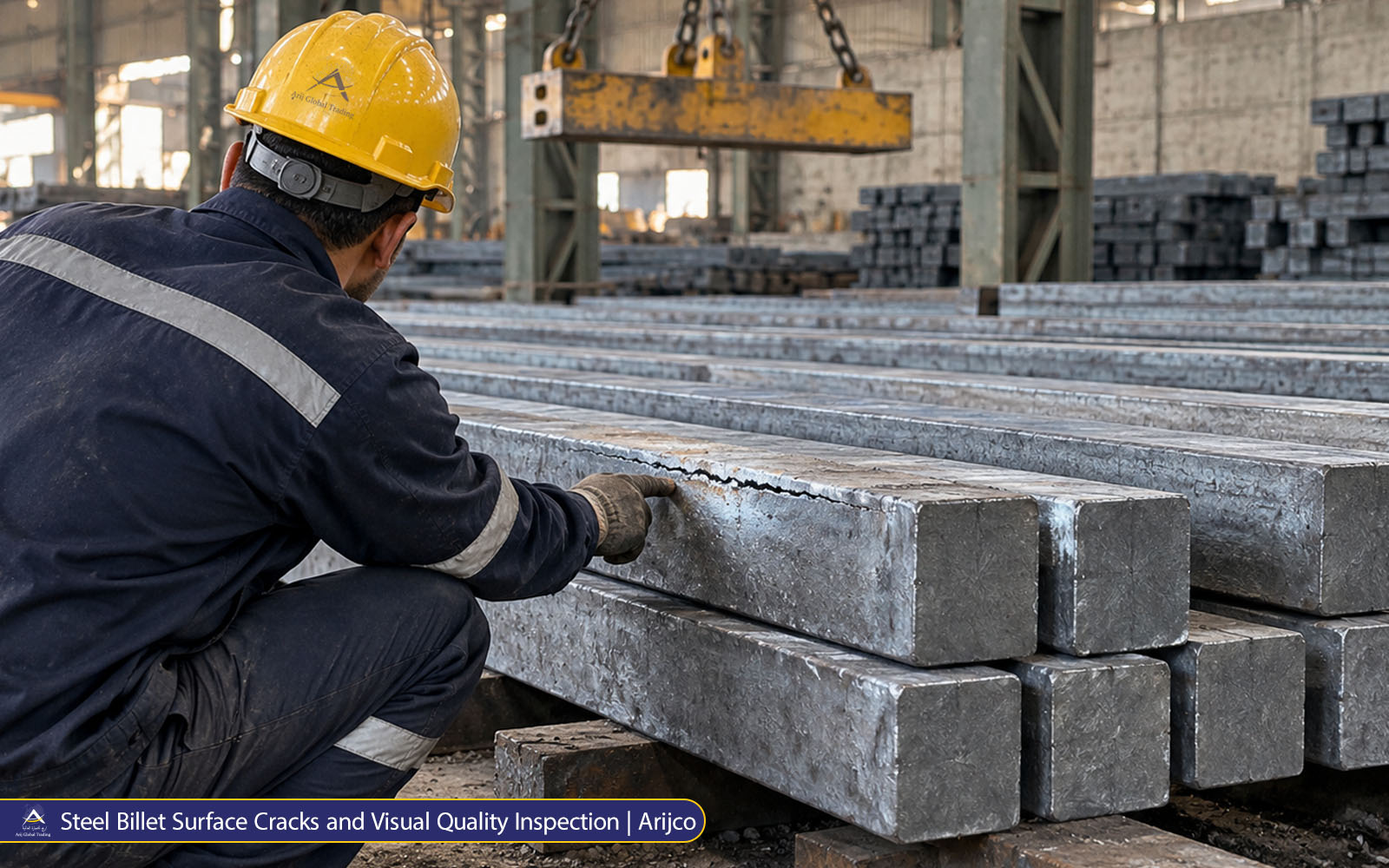
A photograph may show a crack without revealing its depth. Surface cracks require assessment of their location, extent and penetration.
Rolling should not be assumed to eliminate a crack. A review of surface-defect deformation during rolling describes how defects change under different rolling conditions.
Surface conditioning is a separate operation. Where permitted, it should follow an agreed procedure, with verification of the remaining dimensions and surface condition.
Buyer action: Require assessment of suspect cracks and written agreement on any permitted conditioning before releasing the affected material.
4. Scabs, Laps and Other Surface Discontinuities
Raised, folded or irregular surface areas should be examined rather than dismissed as cosmetic. Their appearance alone may not reveal the underlying condition.
Assess each indication against the agreed surface-quality requirements. Record its location and extent, and determine whether further examination or permitted conditioning is needed.
Where conditioning is proposed, agree how the treated area and remaining dimensions will be checked. A record that treatment occurred should be accompanied by evidence that the resulting condition meets the specified requirements.
Buyer action: Agree how the affected material will be handled and verify any treatment before acceptance.
5. Internal Cracks and Porosity
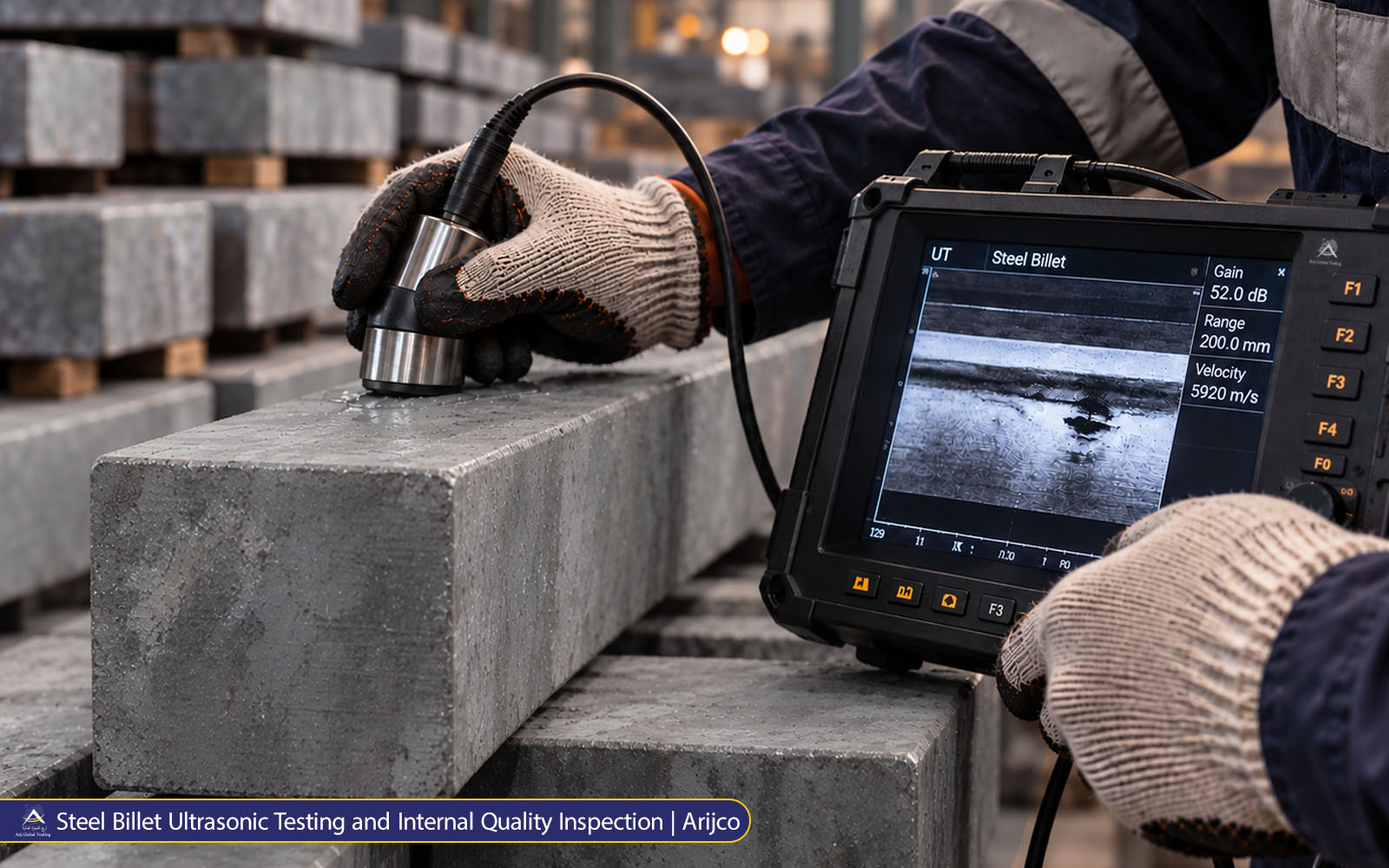
A clean external surface does not establish internal soundness. Internal cracks and porosity are different conditions and should be assessed separately.
Some voids may close during hot rolling, but mechanical closure and bonding of the contacting surfaces are distinct stages. A 2026 ISIJ International study on void closure explains this distinction using artificial voids in steel specimens; it does not establish the soundness of a particular billet.
Where internal-quality testing is required, the steel billet buyer should consult the receiving mill on suitable examination methods. Agree the inspection scope, sampling and acceptance criteria with the supplier before ordering.
Buyer action: Do not release suspect material solely on the assurance that “rolling will fix it.” Require the evidence specified for the intended application.
6. Centerline Segregation
Acceptable heat analysis alone does not establish uniform chemistry throughout a billet. Centerline segregation is localized variation in chemical composition around the billet’s centre.
Macroetch examination can reveal segregation and certain internal discontinuities. ASTM E381 describes macroetch testing for steel bars, billets, blooms and forgings. Referencing the method does not, by itself, define the buyer’s acceptance limits.
Where segregation control is required, the purchase specification should establish the assessment method, sampling basis and acceptance criteria.
Buyer action: Request the agreed internal-quality evidence rather than treating the MTC as proof of uniformity within every billet.
7. Missing or Inconsistent Traceability
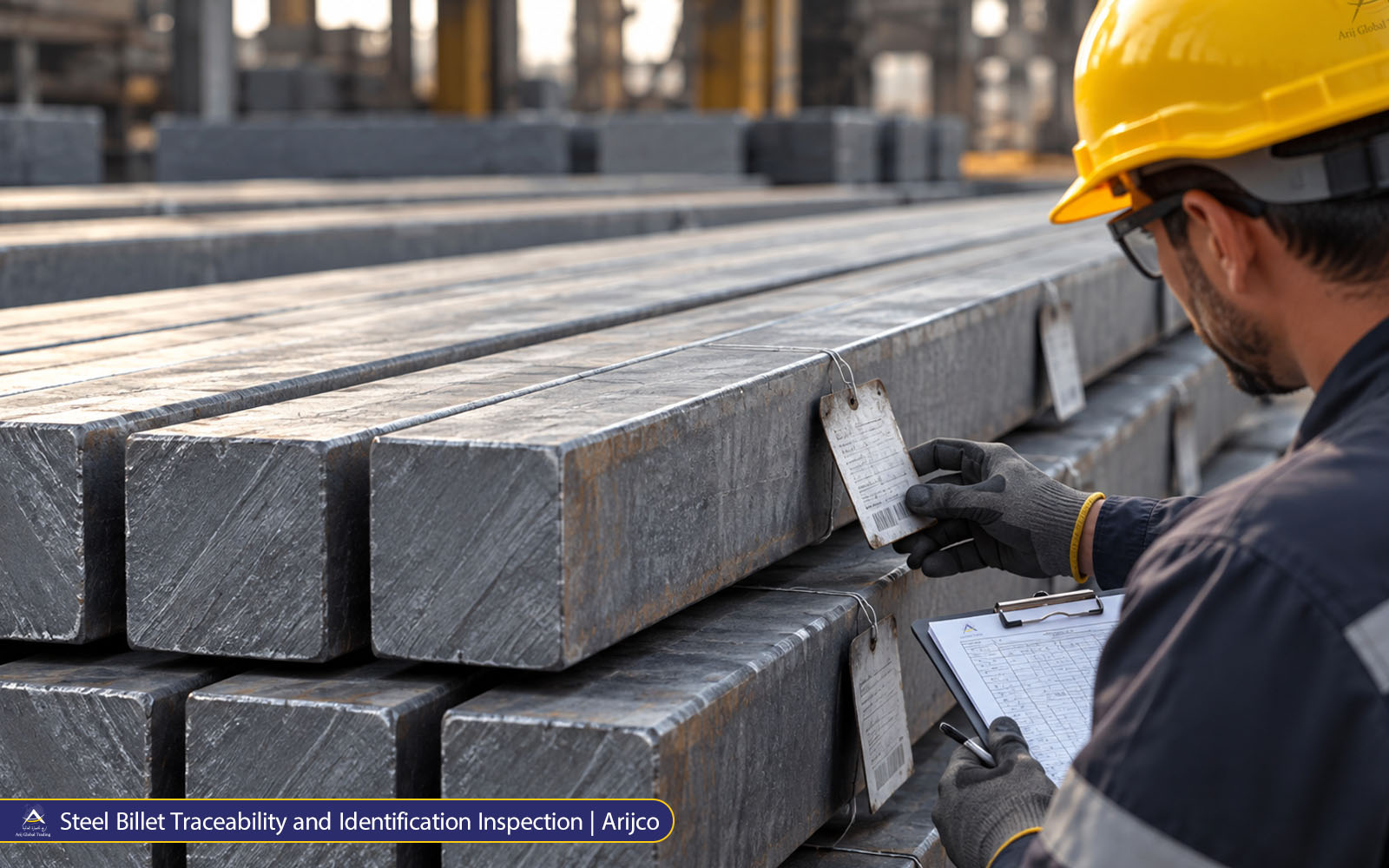
Test records are useful only when they can be linked to the delivered material. Traceability failure is not a metallurgical defect, but it can prevent buyers from verifying compliance.
Check the connection between material identification, heat numbers, MTCs and inspection reports. Multiple heats in a shipment should remain distinguishable through the agreed identification system.
For international purchases, ask the steel billet exporter how identification will be maintained during storage, handling and loading.
Buyer action: Hold the affected lot when material cannot be reliably matched to its records. Resolve unexplained discrepancies before shipment.
This guide provides general inspection considerations. It does not replace the applicable standard, agreed purchase requirements or the receiving mill’s technical acceptance criteria.
Steel Billet Defects and Quality Risks: Evidence to Request
Agree the Acceptance Process Before Shipment
Billet inspection is most useful when acceptance criteria and responsibilities are defined before shipment. Before ordering, the buyer and steel billet supplier should agree:
- The specification, standard edition and acceptance criteria.
- Inspection methods, sampling and responsible parties.
- Required records and material identification.
- Whether conditioning is permitted and how it will be verified.
- The process for holding, reassessing, replacing or rejecting affected material.
Keep unresolved material identifiable and separate from released material. Record the finding, supporting evidence and agreed decision.
Neither a general assurance nor a price discount establishes technical suitability.
Arijco’s Experience in Steel Billet Supply
Arij Global Trading (Arijco) coordinated the export of 4,000 metric tons of continuously cast 3SP steel billet, in 12-metre lengths, to the Middle East. The project brought together material sourcing, logistics planning and export documentation, including coordination of mill dispatch, inland transport, port handling and vessel arrangements.
This project illustrates Arijco’s role in connecting billet sourcing with shipment execution. For a new order, the technical specification, inspection scope and required documentation should be agreed separately.
Discuss Your Next Steel Billet Order With Arijco
If you are still defining your requirements, start with Arijco’s steel billet product page. For a supply enquiry, send the details below so the discussion can focus on your mill’s requirements and shipment priorities.
- Billet grade, governing standard and required chemistry.
- Cross-section, length and dimensional tolerances.
- Quantity and intended application.
- Surface and internal-quality acceptance requirements.
- Inspection and documentation requirements.
- Destination port, preferred Incoterm and delivery window.
Already have a purchase specification? Include it with your enquiry and identify any requirements that still need clarification.
Frequently Asked Questions
Can rolling remove steel billet defects?
Not reliably. Rolling may close some internal voids under suitable conditions, but closure does not guarantee sound bonding. It is not a corrective treatment for out-of-specification heat chemistry. Acceptance should follow the agreed inspection and testing requirements.
Is an MTC enough to accept a billet shipment?
An MTC is one part of the evidence. Also verify material identity and obtain the dimensional, surface and internal-quality records required by the purchase specification.
Does every visible indication require rejection?
No. Acceptance depends on the agreed criteria. A finding may require further examination or permitted conditioning before a decision can be made.
Can photographs verify billet quality?
Photographs can document visible surface conditions and identification markings. They cannot establish chemical compliance or internal soundness, and may not reveal a surface defect’s depth.
For offer comparison, commercial terms and shipment planning, see Arijco’s billet procurement and supply-demand guide.