
Two calcined dolomite shipments may report similar calcium oxide (CaO) and magnesium oxide (MgO) levels yet differ significantly in industrial suitability.
Variations in chemical impurities, particle size, calcination quality and moisture exposure can affect handling, slag chemistry and steelmaking operations.
For procurement managers, selecting a calcined dolomite supplier requires more than comparing prices or typical specifications. Buyers need material that meets their steel plant’s requirements, supported by reliable, shipment-specific evidence.
This guide explains essential calcined dolomite specifications, quality-verification procedures and commercial considerations for informed purchasing decisions.
What Calcined Dolomite Specifications Should Buyers Verify?
Steel mills should evaluate four essential areas:
- Chemical composition: CaO, MgO, SiO₂, Al₂O₃, Fe₂O₃, trace elements and loss on ignition (LOI).
- Physical quality: Particle size distribution, fines, oversize particles and moisture-related deterioration.
- Quality evidence: Certificate of Analysis (COA), sampling methods, laboratory testing and lot traceability.
- Commercial suitability: Packing, delivery arrangements, supplier reliability and total delivered cost.
Published specifications support initial supplier screening. Final acceptance must follow the receiving mill’s agreed requirements.
What Is Calcined Dolomite and Why Is It Used in Steelmaking?
Calcined dolomite, also called dolime or dolomitic quicklime, is produced by heating natural dolomite, principally CaMg(CO₃)₂, to release carbon dioxide and form calcium and magnesium oxides.
In steelmaking, CaO contributes to slag basicity and fluxing reactions, while MgO helps maintain slag conditions compatible with magnesia-based refractory linings.
Research demonstrates that MgO saturation depends on temperature, FeO concentration and overall slag composition rather than purchased MgO content alone.
Scientific reference: Visualization of Slag Data for Efficient Monitoring and Improvement of Steelmaking Slag Operation in Electric Arc Furnaces, with a Focus on MgO Saturation — Metals (2021).
Raw, Calcined and Sintered Dolomite
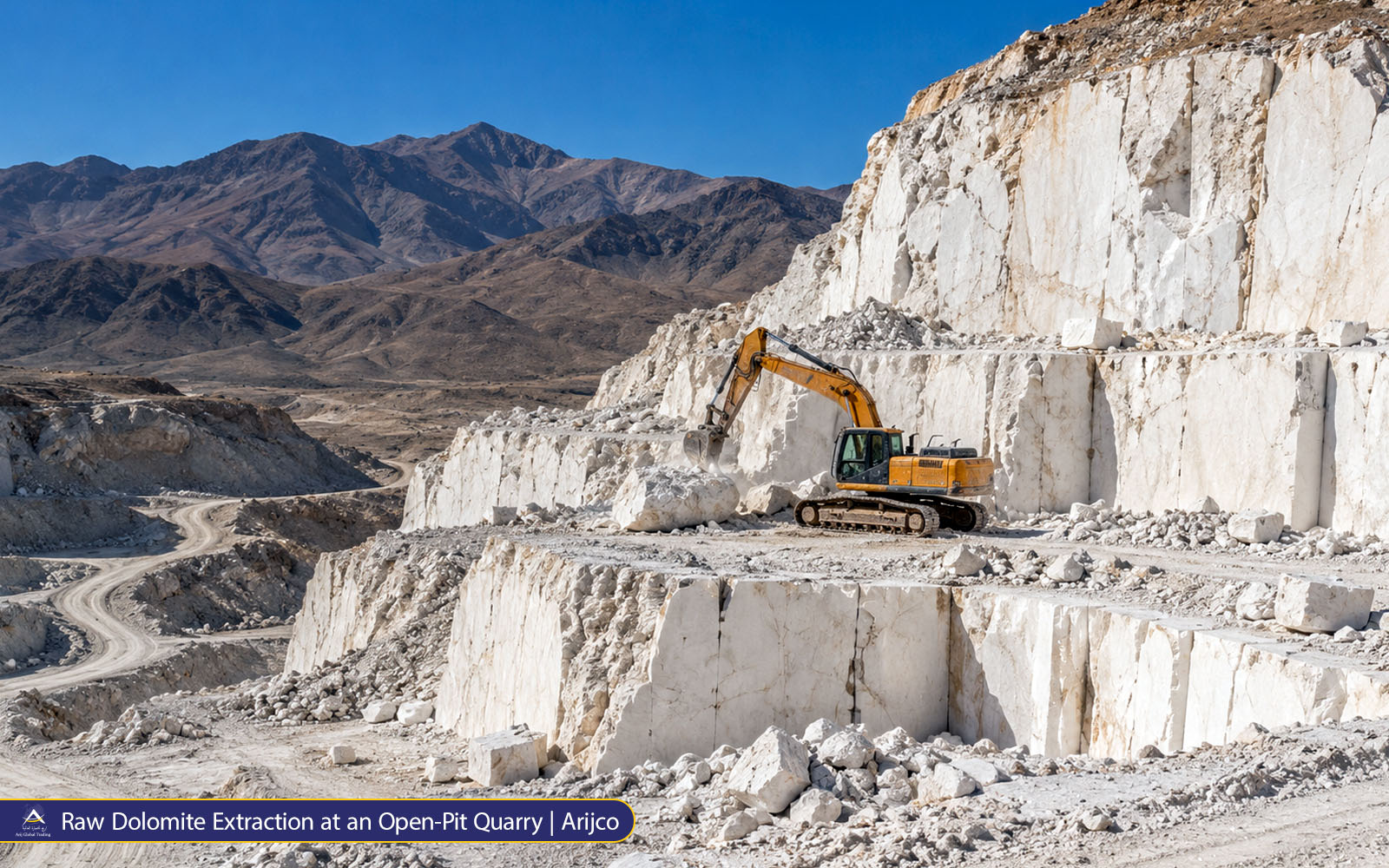
| Material | Main Characteristic | Industrial Relevance |
|---|---|---|
| ◆ Raw Dolomite |
Carbonate-rich mineral | Feedstock and suitable flux applications |
| ◆ Calcined Dolomite |
CaO- and MgO-bearing material | Steelmaking flux systems |
| ◆ Sintered Dolomite |
Dense, high-temperature-treated material | Refractory applications |
These materials are not automatically interchangeable.
For additional background, read Arijco’s introduction to dolomite and its industrial applications.
Key Chemical Specifications for Steelmaking
Calcium Oxide (CaO)
CaO supports slag formation and reactions involving acidic constituents such as silica.
Buyers should confirm guaranteed CaO content, analytical basis and consistency across identifiable lots. Chemical percentages alone cannot establish dissolution behavior under specific furnace conditions.
Magnesium Oxide (MgO)
MgO influences slag chemistry and refractory compatibility.
However, higher MgO is not automatically better. Requirements depend on slag saturation, temperature, FeO levels and operating conditions.
The receiving mill should determine the appropriate MgO contribution rather than apply a universal target.
Impurities and Loss on Ignition
SiO₂, Al₂O₃ and Fe₂O₃ influence slag properties and should meet agreed acceptance limits.
LOI measures sample mass loss during a defined heating test. Elevated results may indicate residual carbonates, hydration-related compounds or other volatile constituents.
LOI alone cannot establish reactivity or identify every cause of mass loss.
Calcined Dolomite Technical Specifications: Arijco Grade 2
Arij Global Trading publishes the following Grade 2 reference specification, Arij-CAD-AZS-502.
| Parameter | Published Grade 2 Value |
|---|---|
| CaO | ≥56% |
| MgO | 37 ± 0.3% |
| SiO₂ | 1.2 ± 0.1% |
| Fe₂O₃ | 0.4 ± 0.1% |
| Al₂O₃ | 0.2 ± 0.1% |
| Sulfur | Trace |
| Phosphorus | Trace |
| LOI | ≤6% |
| Grain size | 5–50 mm |
| Above 50 mm | 5% limit at loading port |
| Below 5 mm | 5% limit at loading port |
Source: Arijco Calcined Dolomite Grade 2 — Official Technical Specification (PDF).
Important: These are typical values for one published grade, not universal steelmaking standards or guaranteed results for every shipment. Arijco provides order-specific specifications that must be approved before contractual acceptance.
For bulk purchasing, discuss your technical requirements with Arij Global Trading.
Physical Quality: Particle Size, Fines and Moisture
Particle size affects conveying, charging and handling.
Excessive fines may increase dust and handling losses, while oversize particles can create charging difficulties.
Buyers should establish acceptable size distributions and inspection locations. Loading-port measurements do not automatically guarantee destination conditions.
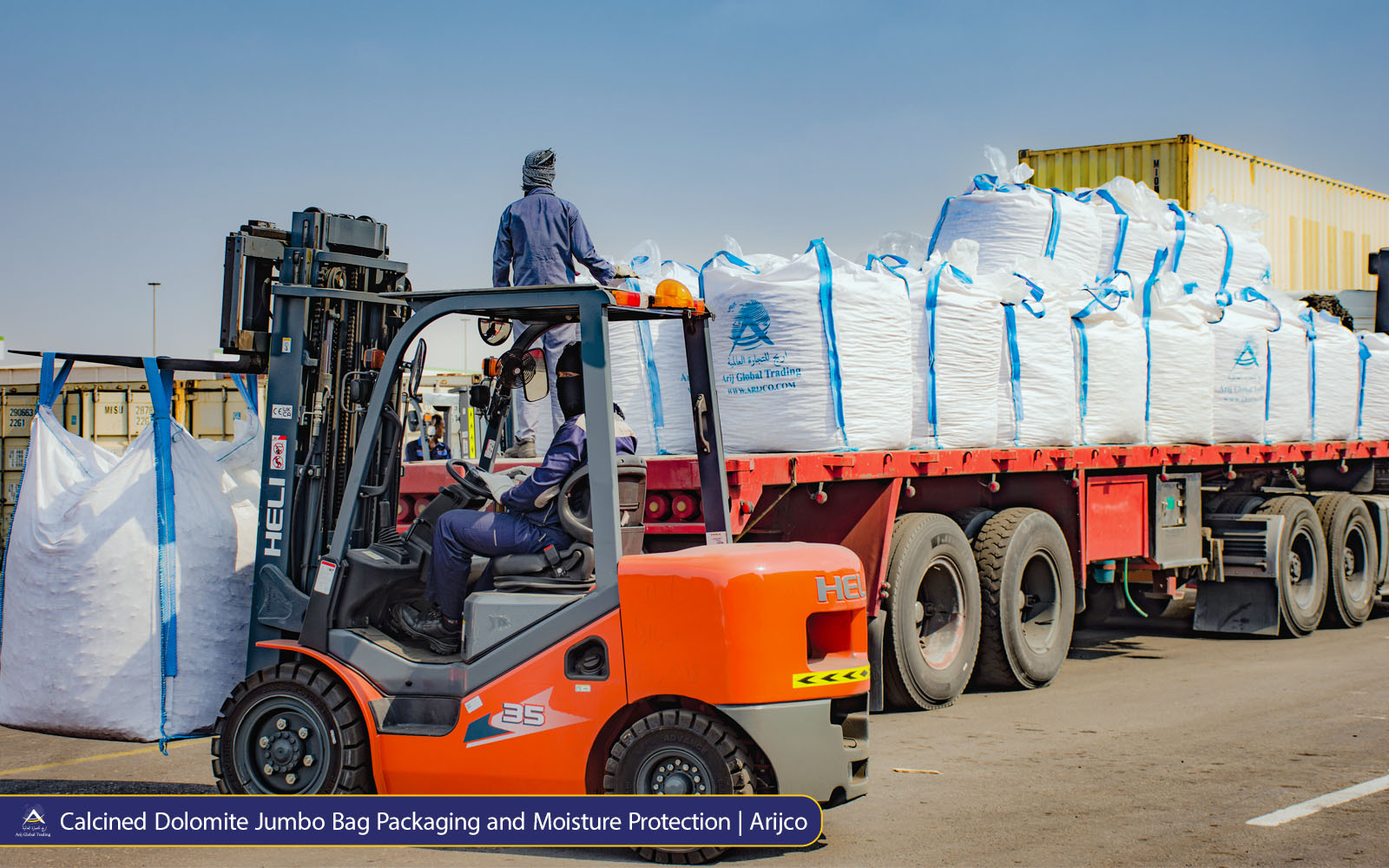
Moisture exposure presents another significant risk. CaO reacts with water to form calcium hydroxide, releasing heat.
Consequently, suitable packing, protected storage and material-condition inspections are important throughout transportation.
How to Verify a Calcined Dolomite Certificate of Analysis
A COA is useful when its results correspond to identifiable shipment material.
| Verification Point | Buyer Requirement |
|---|---|
| Product identity | Correct grade and specification |
| Lot traceability | Results linked to actual cargo |
| Chemical coverage | All required parameters |
| Analytical basis | Clearly identified reporting basis |
| Sampling | Representative, documented procedure |
| Laboratory | Suitable testing competence |
| Documentation | Consistent shipment records |
A supplier-issued COA does not automatically constitute independent verification.
Where required, independent testing should follow agreed contractual procedures. Historical certificates may indicate supplier consistency but cannot guarantee current shipment quality.
Why the Lowest Calcined Dolomite Price May Not Offer the Best Value
The lowest quoted price does not necessarily provide the best procurement value.
Buyers should compare freight, packing, inspection costs, acceptable fines, delivery reliability and material compliance.
A lower FOB quotation may become less attractive after additional transportation and handling expenses.
Delivered cost per accepted tonne offers a useful comparison when calculated using consistent assumptions and contractually defined acceptance criteria.
How Should Steel Mills Evaluate Calcined Dolomite Suppliers?
Supplier assessment should prioritize documented technical capability, quality consistency and realistic delivery commitments.
For regional sourcing considerations, explore Arijco’s calcined dolomite supply guide for South Asian steel mills.
International buyers should also evaluate inspection coordination, export documentation, packing suitability and contractual responsibilities.
Arijco’s commodity trading services provide further information about its sourcing and logistics activities.
EAF vs. BOF: Do Calcined Dolomite Requirements Differ?
Neither furnace route has one universally suitable dolime grade.
| Slag management | Basicity, FeO and foaming | Slag formation and refining |
| MgO contribution | Saturation and refractory compatibility | Converter lining protection |
| Material sizing | Charging equipment requirements | Flux addition practices |
The National Lime Association’s metallurgical guidance provides further information about dolomitic lime applications in steelmaking.
Match Quality Risks to Verification Evidence
| Quality Risk | Evidence to Request | Main Limitation |
|---|---|---|
| Chemical mismatch | Lot-specific analysis | Sampling coverage |
| Elevated LOI | Agreed LOI test | Cause may remain uncertain |
| Excessive fines | Sieve analysis | Transit-generated fines |
| Material inconsistency | Multiple lot records | Historical variation |
| Hydration damage | Condition inspection | Subsequent exposure |
| Traceability gaps | Matching shipment records | Documentation reliability |
Purchase contracts should define sampling responsibilities, acceptance limits and dispute-resolution procedures before shipment.
Packaging, Storage and International Logistics
Calcined dolomite requires handling arrangements appropriate to its moisture sensitivity.
Containerized shipments need suitable containers, intact packaging and moisture protection.
Break-bulk shipments require appropriate weather precautions and cargo-handling procedures.
Buyers should confirm packing type, unit weight, destination requirements and responsibility for protecting the material.
Calcined Dolomite Supplier and RFQ Checklist
A complete RFQ should specify:
- Technical: Application, CaO, MgO, impurity limits, LOI and particle size.
- Quality: Sampling, testing, acceptance criteria and inspection.
- Commercial: Quantity, Incoterms, payment terms and shipment schedule.
- Logistics: Packing, destination and delivery arrangements.
- Contractual: Quantity tolerances, quality claims and dispute procedures.
Clear requirements help suppliers prepare technically comparable quotations.
Arij Global Trading’s Calcined Dolomite Supply Experience
Arij Global Trading supports industrial buyers through sourcing coordination, specification alignment, documentation and international logistics planning.
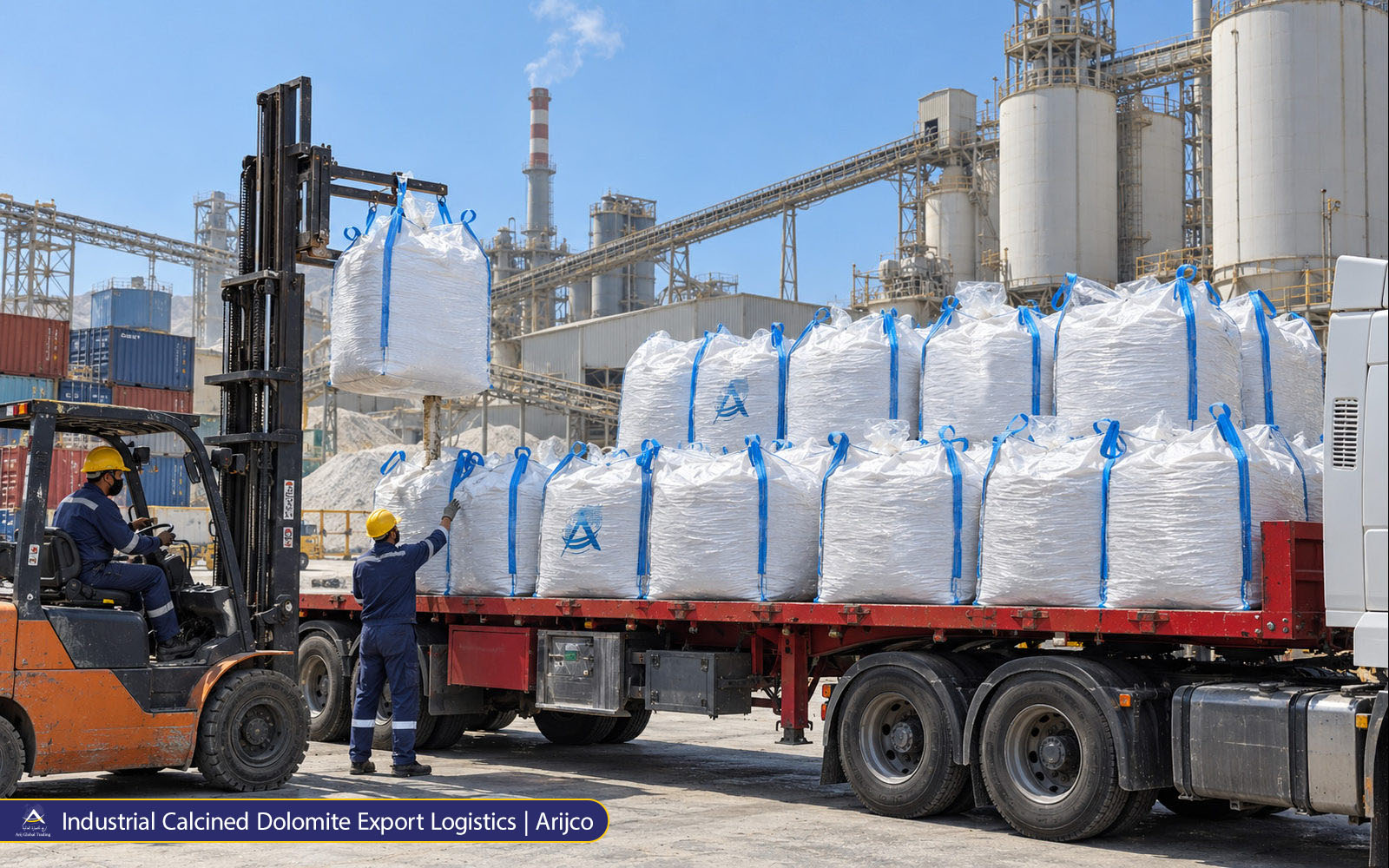
Its published portfolio documents the export of 3,000 metric tons of calcined dolomite to South Asia, transported in containers using four-layer jumbo bags with two nylon layers and bottom spouts.
View Arijco’s 3,000 MT Calcined Dolomite Export Project.
This project illustrates a documented export arrangement. Specifications and shipment conditions for new orders require individual confirmation.
Frequently Asked Questions About Calcined Dolomite Specifications
What are the most important calcined dolomite specifications?
CaO, MgO, impurities, LOI, particle size and material condition. Acceptance limits depend on the receiving mill’s requirements.
Is higher MgO always better for steelmaking?
No. Appropriate MgO levels depend on slag chemistry, temperature and refractory requirements
Can typical specifications replace shipment-specific testing?
No. Acceptance must follow agreed contractual specifications and relevant shipment-quality evidence.
How should buyers compare calcined dolomite suppliers?
Confirm technical compliance, then compare quality evidence, packing, delivery reliability and total delivered cost.
What should a calcined dolomite buyer include in an RFQ?
Specify chemistry, LOI, particle size, quantity, packing, destination, Incoterm and inspection requirements.
How should buyers evaluate a calcined dolomite exporter?
Assess product compliance, quality consistency, export documentation, inspection arrangements and shipment reliability rather than price alone.
Why is moisture protection important during shipment?
Moisture-reactive CaO can undergo hydration, generating heat and altering material condition. Appropriate packing and storage reduce exposure risks.